Research
Growing up in the Episcopal church, Abbie learned to love the music of the Anglican tradition, and it has since become such a fascinating topic of study to her. She feels a connection to the liturgy and hymns, and in particular to the anthem “I Was Glad” by Charles Hubert Hastings Parry (1848-1918). Throughout her years studying the organ, she became more invested in the history of British liturgical music and its history, in particular Hubert Parry and his contemporary Charles Villiers Stanford (1852-1924). She embarked on a 2-week research trip in July and August of 2024 to England to study Victorian-era British organs and Anglican liturgical traditions, attended the Royal College of Organists’ (RCO) Summer Course 2024 where she learned about liturgical and performance skills from professionals like Jeffrey Makinson and Frederick Stocken, visited many cathedrals and attended many liturgical services, made recordings of and played many of the organs visited, and made observations about the soundscape of the cathedrals and organs.
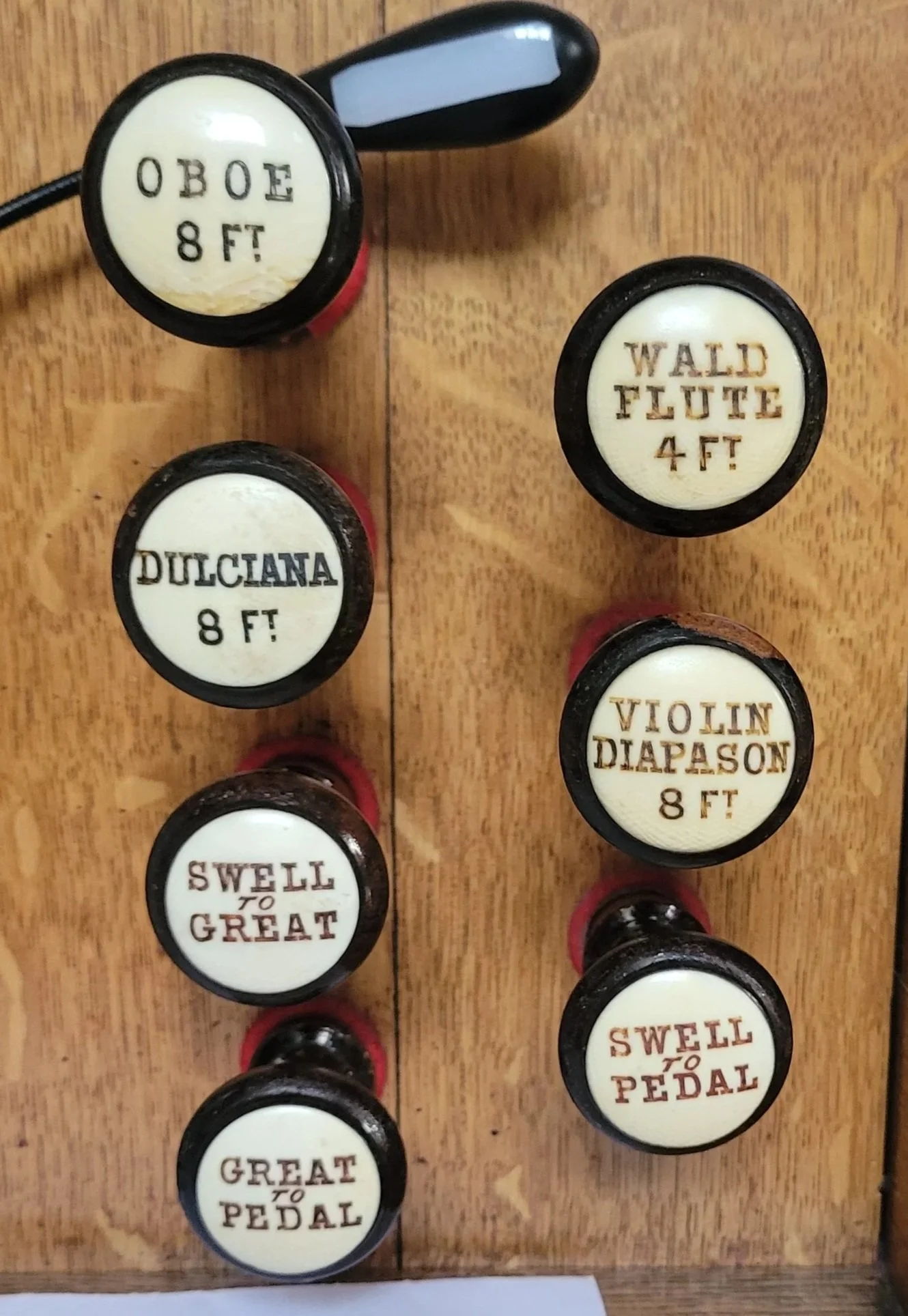
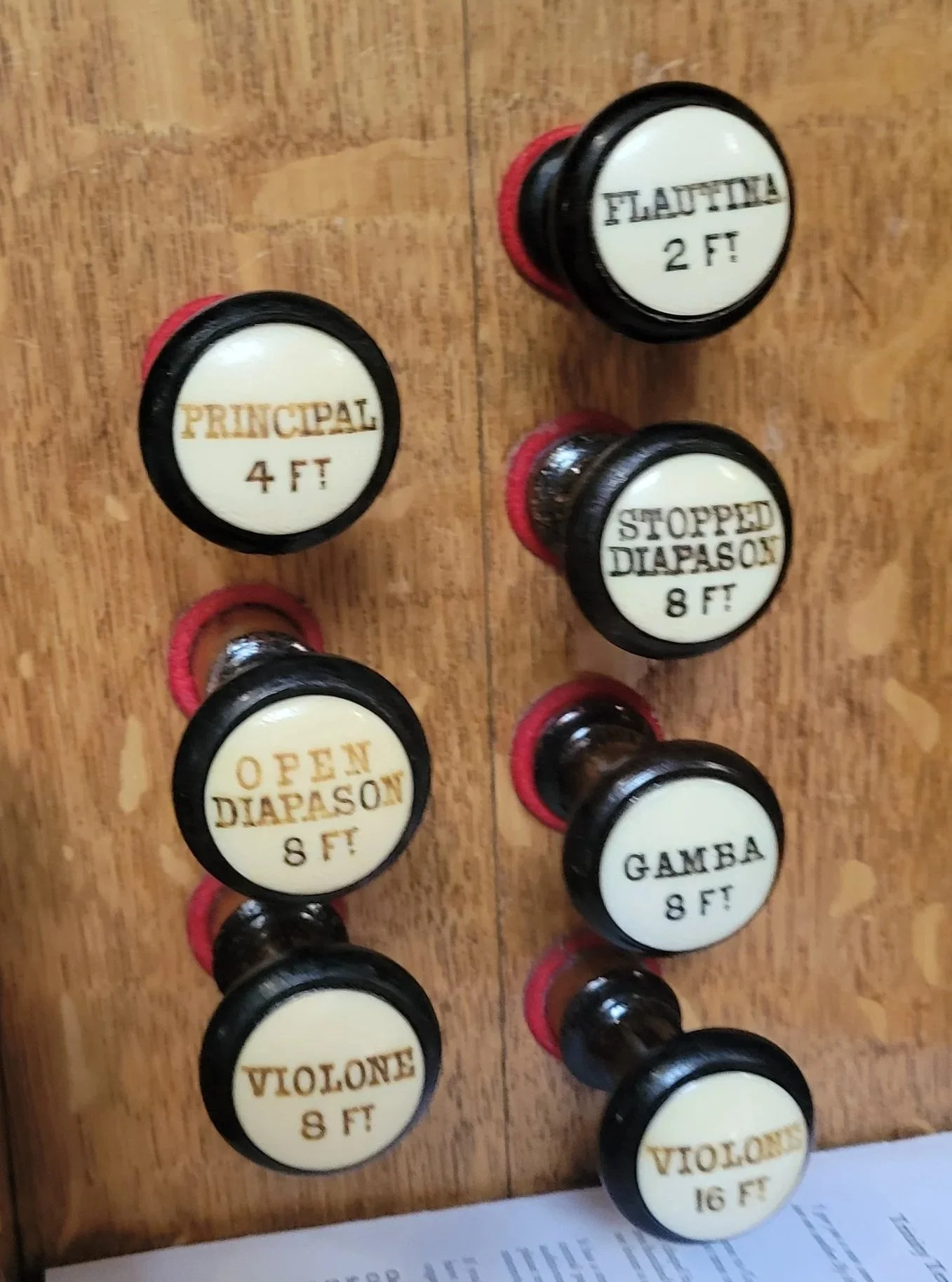
Stops of Corpus Christi Chapel, Oxford University

Manuals and stops of Gray & Davidson organ at St. Anne’s, Limehouse
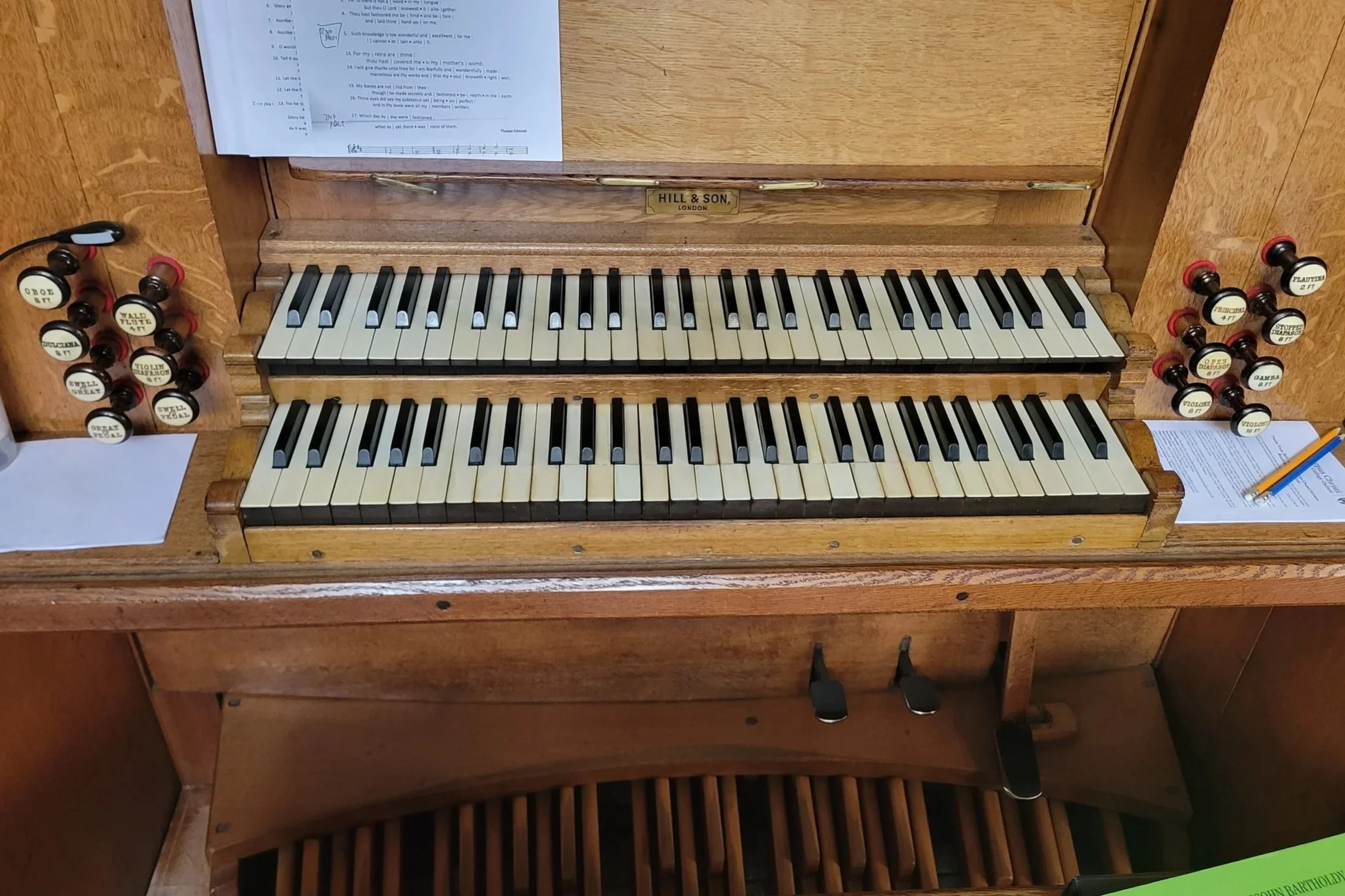
Manuals of 1880 Hill organ at Corpus Christi Chapel, Oxford University

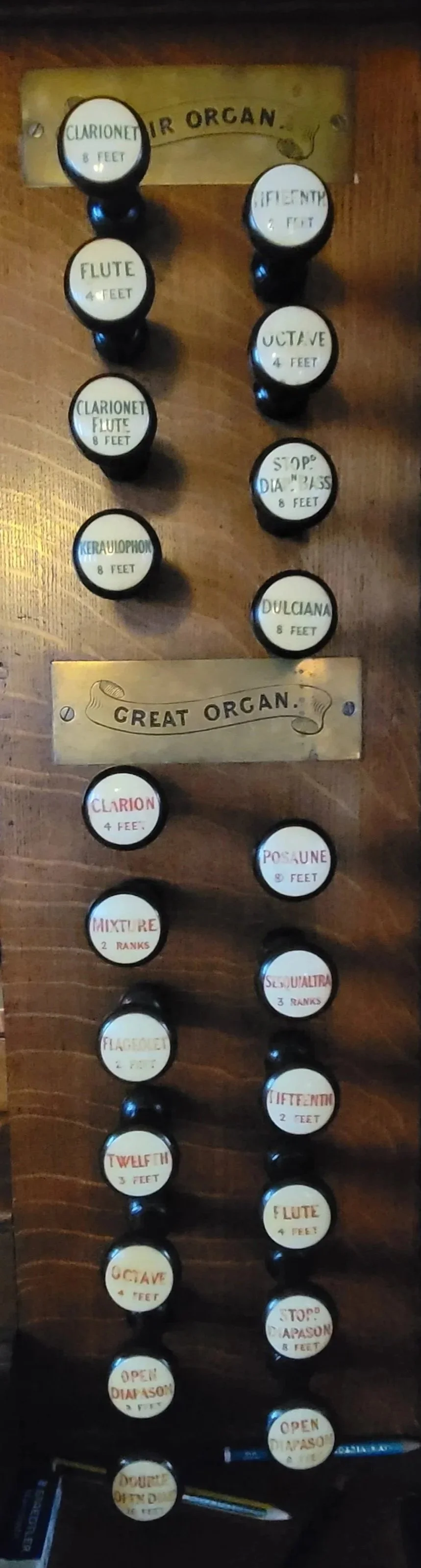
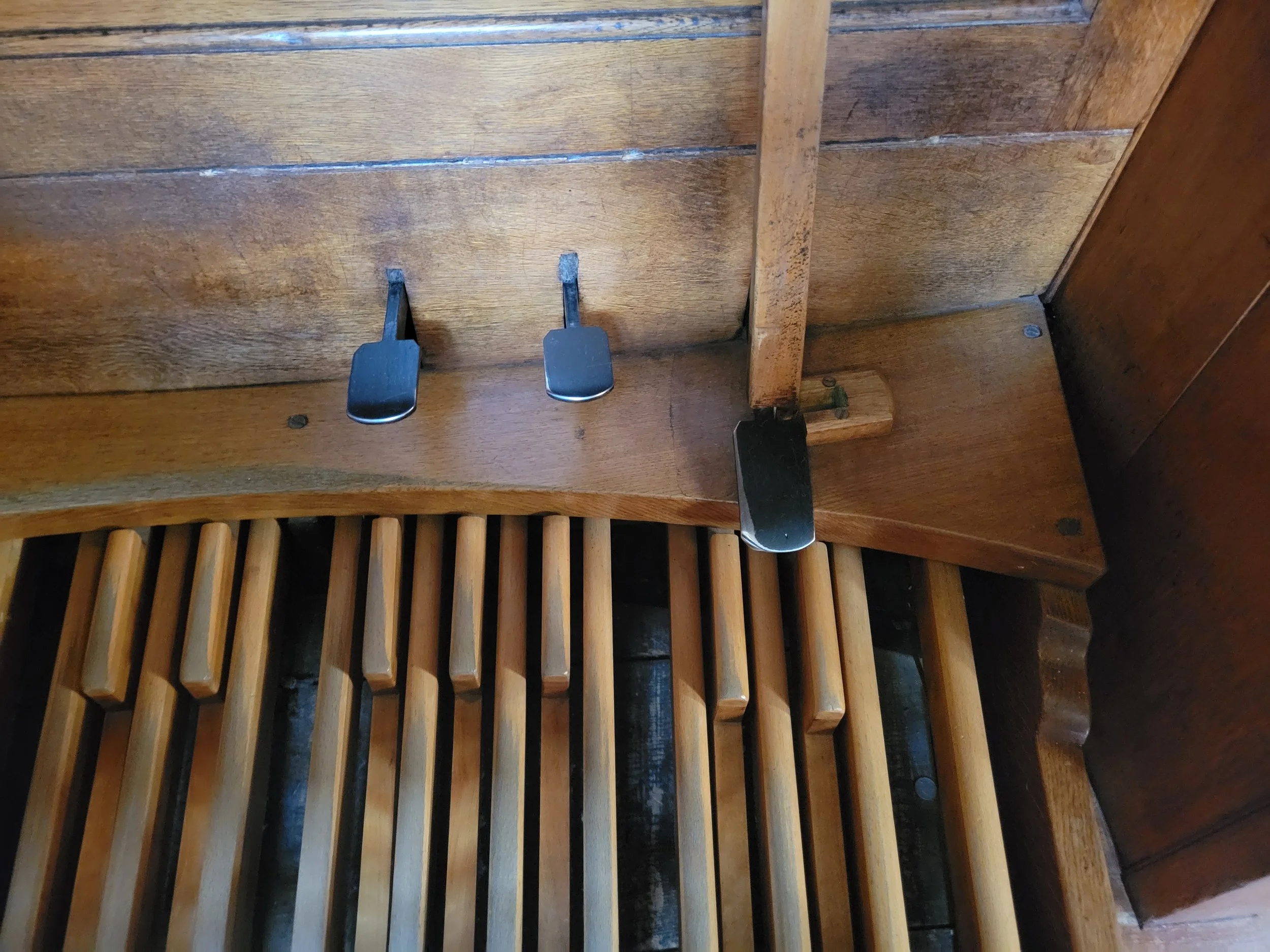
Pedals and swell mechanism at Corpus Christi Chapel, Oxford University
Organs Visited
Played: (RCO Course organs) St. John the Evangelist, Islington; St. Giles, Cripplegate; St. Lawrence Jewry
Played/recorded: Oxford: Corpus Christi, Wadham College, & Keble College; Cambridge: Queens’ College; St. Dominic’s Priory (Willis); St. Anne’s, Limehouse;
Observed: Westminster Abbey; St. Paul’s Cathedral; London Bridge Station; All Saints’ Church, Margaret Street; York Minster Abbey; Canterbury Cathedral
-
1851 Gray & Davidson organ
a featured organ at the 1851 Crystal Palace Exhibition
difficult to play, but was a good idea of the kind of organ that Felix Mendelssohn would have played.
Had newer innovations of the era, such as a ratchet swell pedal and combination pedals, which aided the organist in playing more complicated pieces
-
mainly from the late 1800s
mainly functioned to accompany choirs
able to hold their own in accompanying Victorian-era choral music, and blended well with themselves
-
had a darker tone than the smaller organs, most likely affected by the high ceilings and gothic architecture
“I Was Glad” would seem to sound the best on these larger organs with a wide range of orchestral stops and a large dynamic range
Workshops/Background
She attended a Registration for Accompaniment workshop led by organist and composer Frederick Stocken, where we were taught the traditional way of preparing a 19th century anthem
Provided guidelines on how to accompany a British choral anthem in the Romantic era (Victorian era).
Learned to view dynamics as “characters” rather than volume,
which would affect how one plays each section with a different dynamic level
Mentioned how Stanford’s music has a rich, dark color to it because the organ plays different bass notes than the choir sings, adding depth to the sound
Learned about the tonal families, like flutes, principles, strings and reeds, and the types of “soft reeds” (like the Oboe, French Horn, or Clarinet) one can use in a traditional British crescendo
Attended Jeffrey Makinson’s Liturgical Skills class on the 1984 Keith Bance & Michael Mason organ at St. Bride’s, Fleet Street, where they focused on the appropriate performance practice tradition for the accompaniment of Parry’s “I Was Glad”.
Learned about how to solo out the original orchestral voices in the organ accompaniment score
Learned how to effectively create an effective crescendo with the appropriate stops
Learned how to balance the registration with the choir
He demonstrated the piece in his own playing, explaining his sound and technique choices as he went.
Additional Conclusions
Found through extended research that the liturgical music tradition was closely linked to the capabilities of the organ in the Victorian era, and with the innovations of orchestral stops and larger organs came the expansion of compositional style for the organ
Composer Charles V. Stanford was at the forefront of Anglican Choral Revival, set the stage for the British liturgical tradition, and is still used in most large Anglican services today. He was a contemporary of Charles H. H. Parry, and influenced his use of orchestral color in organ accompaniments
Parry originally wrote “I Was Glad” for choir and orchestra for the Coronation of King Edward VII, and the piece was later adapted for organ to allow for further use of the piece “I Was Glad” has been performed in the coronations of King Edward VII, King George V, Queen Elizabeth II, and most recently King Charles III, and is commonly done for weddings and events of the state today